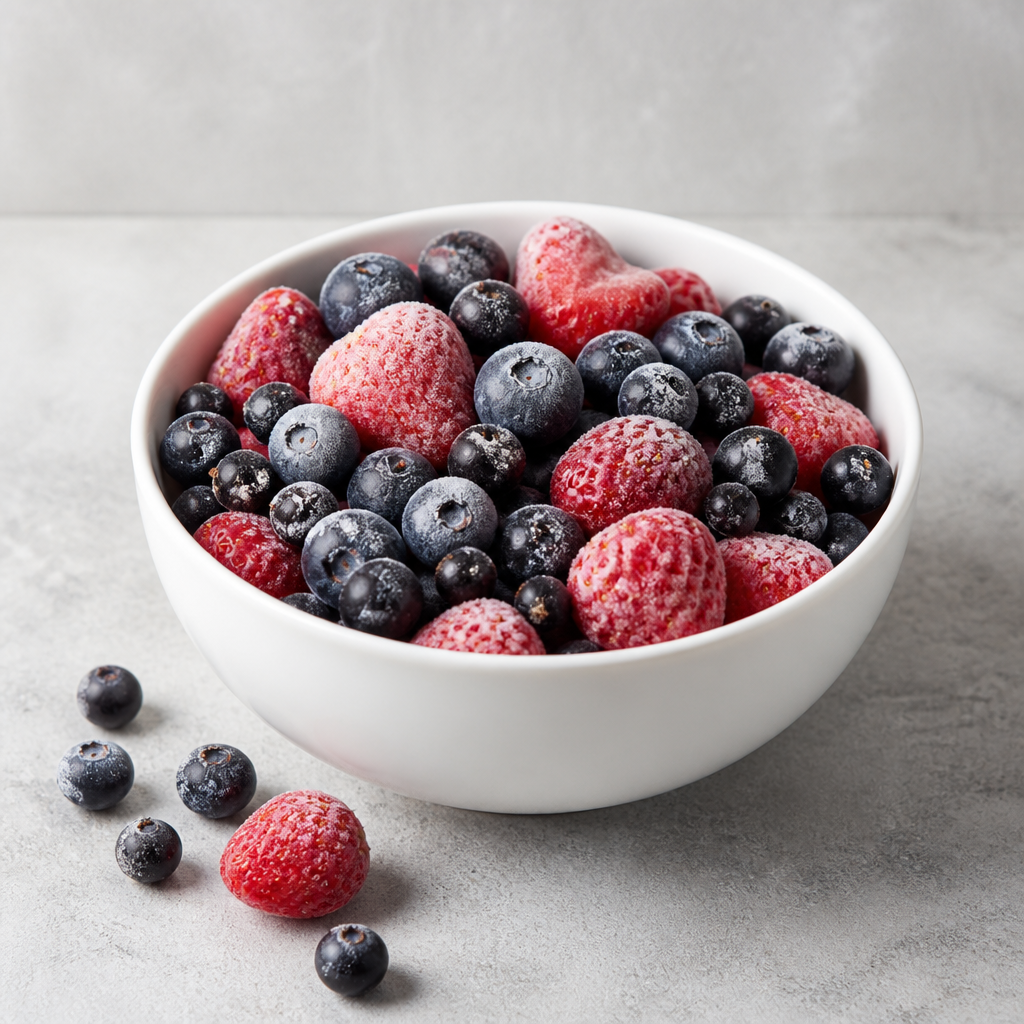
Berry markets reward buyers who watch the calendar closely, and this week delivered no shortage of signals. Six developments across supply, pricing, and regulation deserve a place on your radar before Q4 programs are finalized.
Record summer heat cut into Poland’s 2026 blackcurrant harvest, yet processor demand remained strong enough to keep wholesale prices elevated. At Bronisze, Poland’s main wholesale market, blackcurrants traded at EUR 3.50–5.80/kg on 31 July, per fresh-market.info. Industry commentary from Tridge points to sustained high prices through the season, so buyers planning 2027 juice and concentrate programs should expect firm offers.
Chile’s 2026 blueberry season reportedly finished about 25 percent below volume targets and ended two weeks early, according to FreshFruitPortal, while Mexico’s season produced some of the most notable spot-market prices in recent memory. The picture is one of regional divergence rather than uniform surplus, and frozen buyers are already weighing how the fresh-market squeeze will spill into autumn IQF availability.
On the strawberry side, European fresh wholesale prices bottomed out in spring when peak supply arrived: Mercamadrid recorded a 2026 low of EUR 3.04/kg in Week 15, per Wikifarmer. Frozen transaction prices tell a steadier story, with Tridge data for February 2026 showing frozen strawberries at $5.73/kg in the United States and $3.24/kg in Poland. For processors, the takeaway is that fresh-market volatility rarely translates one-for-one into frozen contracts.
Tariff schedules continue to reshape sourcing math for Chinese-origin berries. NABC trade tracking shows US duties on Chinese blueberries at 80 percent fresh and 72 percent frozen, and GCCA’s July 2026 analysis notes that standard frozen fruit was left off recent exemption lists. Importers with US exposure should re-run landed-cost models before locking in volumes.
The EU Deforestation Regulation now applies from 30 December 2026 for large and medium operators, with micro and small enterprises following on 30 June 2027, per EY and Weil analysis of Regulation (EU) 2025/2650. Traceability documentation for berry supply chains has shifted from a rumor to a planning item.
Finally, a calendar anchor: FRUIT LOGISTICA 2027 runs 3–5 February in Berlin, with more than 2,500 exhibitors expected across 26 halls. For buyers consolidating their sourcing trips, the date is worth blocking early.
Frozen berry sourcing has become a year-round discipline. We scan these signals every week so your team doesn’t have to. Follow us so next Thursday’s brief reaches your feed — or DM “BRIEF” and we’ll email you the printable version.