Fresh berries are among the most perishable raw materials in food trade, which is why the quality of an IQF shipment is decided long before the container is loaded. Here is what a disciplined field-to-frozen operation looks like — and what buyers should verify when they audit a supplier.
Receiving and sampling. Trucks arrive with temperature logs, and every lot is sampled at the dock for temperature, damage, and ripeness before it is accepted. A supplier that skips this step is already betting your shipment on luck. Ask to see the receiving standard and the rejection rate for the last season.
Sorting and washing. Leaves, stems, and under-ripe fruit are removed mechanically and by hand, then the fruit moves through a washing line. For delicate items like raspberries and blackberries, gentleness is the whole game: bruised fruit turns to mush in the freezer tunnel. Ask how wash water temperature and dwell time are controlled for fragile SKUs.
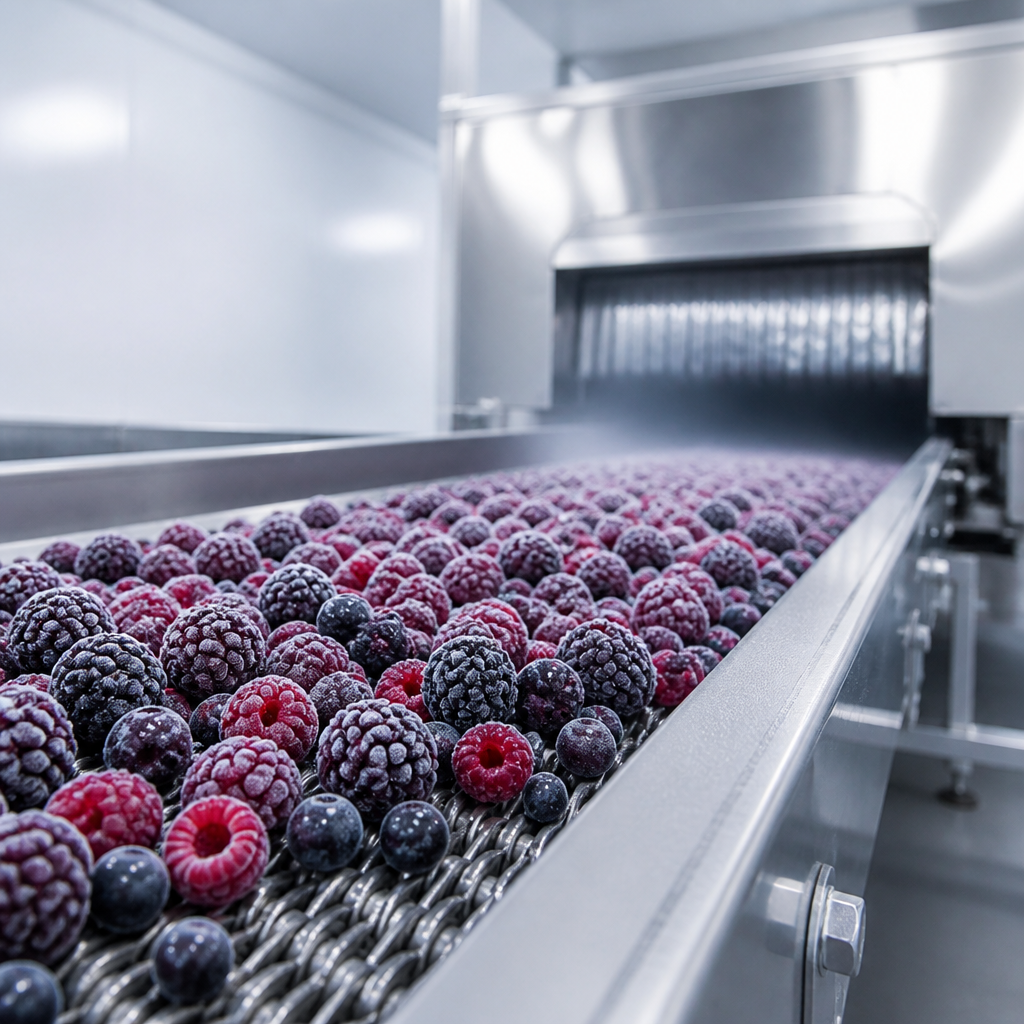
The IQF tunnel. Each piece freezes individually so the finished product pours like gravel rather than forming one solid block. Tunnel parameters — belt load, air temperature, and residence time — are set per fruit, and a single line will run different profiles for strawberries, grapes, and blackcurrants.
Screening and packing. After freezing, the product passes metal detection and, in most modern plants, X-ray inspection, followed by grading and packing into lined cartons or bulk bags. Every batch is tied to a lot code so that one quality issue can be traced back to a field and a picking day.
Cold storage and loading. Cartons move to storage held near -18°C, and containers are pre-cooled before loading. Temperature recorders travel with the shipment, and the data file should reach your quality team with the documents. If a supplier cannot produce continuous temperature records for your last three containers, that is a red flag worth taking seriously.
We run this playbook on every berry we ship, and we would rather show you than tell you. Book a virtual plant tour to see the cold chain from receiving dock to reefer container — no sales pitch, just the line in operation.