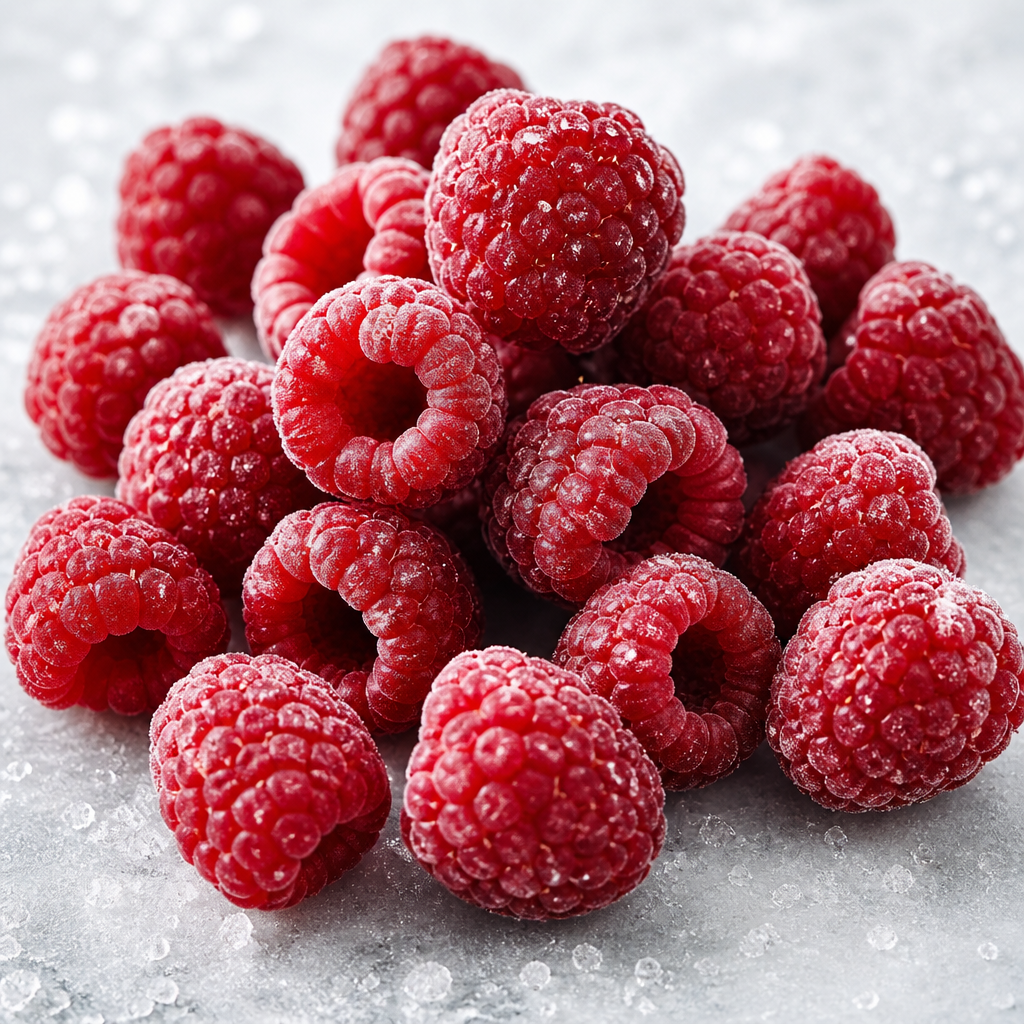
Raspberries are the hardest berry to freeze well, and the reason is structure. Each drupelet is a tiny juice sac clinging to a hollow core, which makes the fruit fragile, fast-ripening, and unforgiving in the cold chain. For buyers, that means IQF raspberries reward attention to detail more than any other berry in the portfolio.
Why they are difficult. Raspberries bruise, bleed, and collapse when handled warm or roughly. The window from harvest to freezer is measured in hours, not days, and every hour of delay shows up as juice loss in the bag. That is why serious packers schedule raspberry runs in the coolest part of the day and log the harvest-to-tunnel time on every lot. At WylFoods, raspberry intake is temperature-checked at the receiving dock and the field-to-freezer window is recorded per lot, so the data exists if a buyer asks. [Company Fact Pending: confirm actual intake procedures and log format]
What grading really means. IQF raspberries are typically sold by size and defect tolerance, with whole, intact berries commanding a premium over broken or seedy lots. Color matters too: a bright, uniform red is the standard buyers expect, and off-color fruit is either sorted out or downgraded. The specification sheet should name the acceptable percentage of broken berries, foreign material, and mold — if it does not, ask why.
Brix and flavor. Raspberries typically carry lower Brix than blueberries, but the acidity is part of the appeal, especially for bakery and dairy applications where tartness balances sweetness. Freezing locks in the harvest profile; a raspberry picked at the right ripeness keeps its flavor, and one picked early never catches up in the freezer.
Applications drive the spec. Bakery buyers want whole berries that hold shape through mixing; yogurt and smoothie buyers tolerate some breakage but want clean flavor; jam and compote buyers care less about whole fruit and more about consistency. Tell the supplier the application, because the right spec for one is the wrong spec for another.
The cold chain is non-negotiable. Raspberries must stay at or below -18°C from tunnel to warehouse, and they suffer visibly from temperature excursions — clumping, frost, and texture loss. Ask for temperature logs on the container, not just a signature on a form.
The practical move: order samples against your application, run your own thaw test, and compare the Certificate of Analysis against the spec sheet. If you want our raspberry specification sheet with the grading table and testing schedule, request it and we will send it with the sample program details.
Industry Standard (IQF raspberry grading and handling practice)