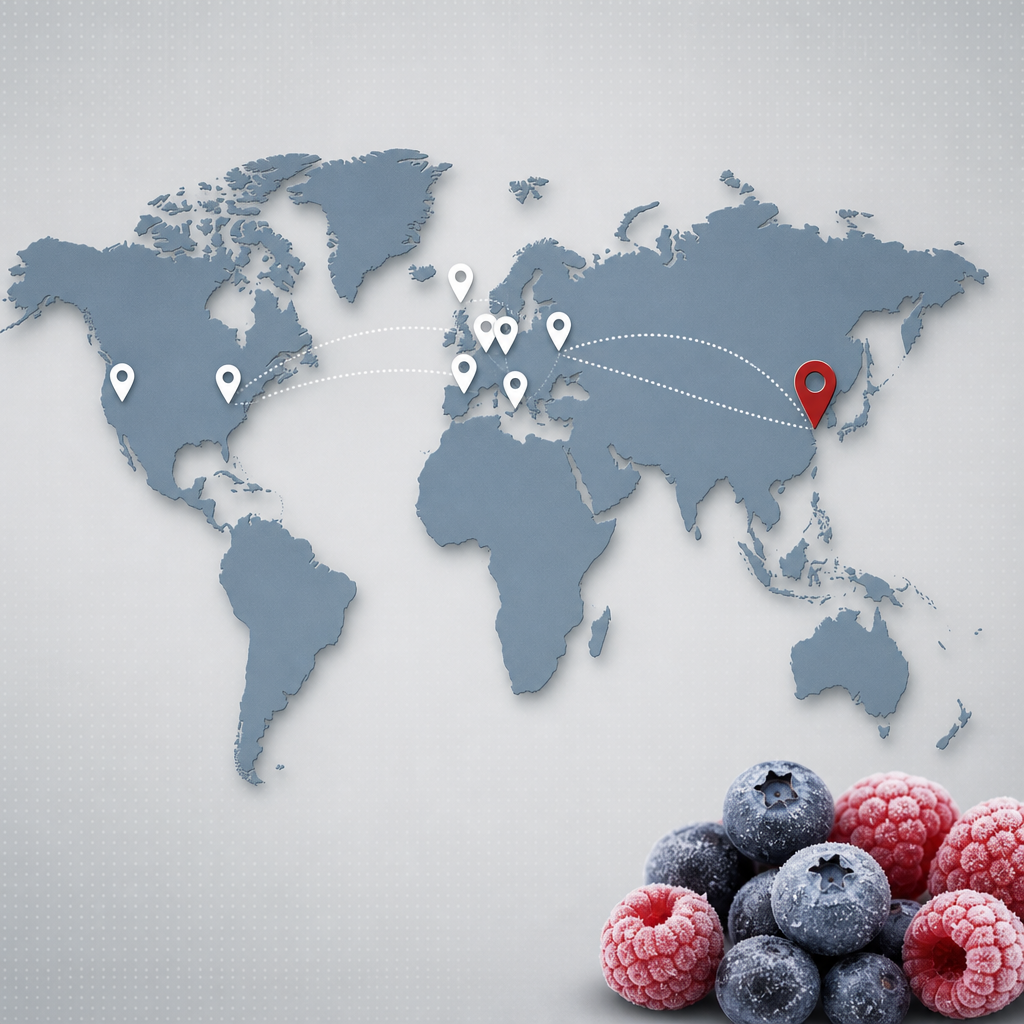
Trade turbulence has a side effect buyers rarely complain about: it widens the shortlist. When tariffs move, weather shifts, and one origin stumbles, the companies that have already built relationships across multiple sources are the ones that keep lines running. With that in mind, here are ten frozen fruit and vegetable suppliers worth knowing in 2026 — in no particular order, because each plays a different role in the global picture.
Ardo (Belgium) is one of Europe’s largest frozen vegetable processors, with production across several countries and a deep retail and foodservice presence. Greenyard Frozen (Belgium) combines frozen fruit and vegetable processing with a global retail footprint. Pinguin Foods (Belgium) focuses on frozen vegetables and pulse products for industrial and retail buyers. Orogel (Italy) is a family-owned frozen fruit and vegetable group with strong roots in Italian retail. Bonduelle (France) built its name on vegetables in every format, fresh, canned, and frozen, with a global distribution network.
Poland anchors the European berry side. Hortex (Poland) is one of the region’s established frozen fruit and vegetable producers, and Alasko (Poland) specializes in frozen fruit, including berries, supplying industrial customers across Europe. In North America, J.R. Simplot (US) is a major frozen produce and potato processor with a long history in the frozen category. Nomad Foods (UK), whose brands include Birds Eye, calls itself Europe’s largest branded frozen food company and reported its half-year results this month. [Source: frozenfoodsbiz.com, Aug 17, 2026]
And then there is the emerging tier. WylFoods (China) is an IQF fruit and vegetable exporter building its name on berries — strawberries, blueberries, raspberries, and blackberries — with a position that is growing in the export market. [Company Fact Pending: replace with verified capacity, certifications, and export destinations] What makes suppliers like WylFoods interesting in 2026 is not size; it is flexibility. A supplier that can document its cold chain, commit specifications in writing, and shift between products and pack formats is a useful hedge when big origins wobble.
The lesson from this list is simple: the global frozen category is broad enough that no single origin owns it, and no single supplier should own your program. If you are building a multi-origin sourcing plan and want a one-page comparison framework for suppliers like these, message us and we will send the template we use internally.
frozenfoodsbiz.com (Aug 17, 2026); supplier descriptions are general industry knowledge, verified before publishing